The Late Roman Empire
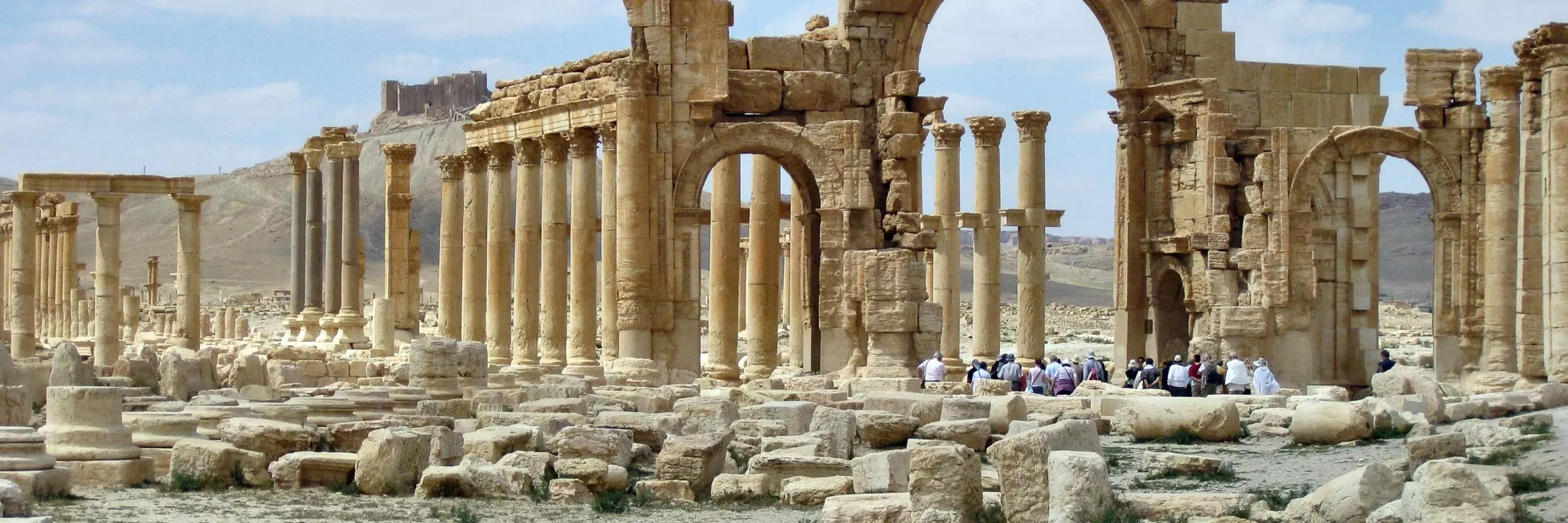
The late Roman empire was a formidable and successful power, after some very difficult times in the mid-third century. For most of the fourth century the greater part of the Roman world enjoyed a period of tranquillity and prosperity, though this ended dramatically in the Balkan provinces in 378, when the emperor Valens was defeated and killed at the hands of the Goths. In the fifth century, the western empire was gradually overrun by Germanic invaders, though a western emperor survived at least in name until 476. By contrast, the eastern empire, now centred on Constantinople, flourished during the fifth century, and in the sixth (under the emperor Justinian) even launched a programme of reconquest of several of the western provinces.
The late Roman period (which we are defining as, roughly, AD 250-450) saw very important changes within the empire, which included a realignment of political power (away from the cities, and in favour of the central state), and, above all, the momentous abandonment of Roman polytheism in favour of the new religion, Christianity. This religious change (which determined the religious and cultural future of western Eurasia) has always been, and remains, an area of intensive research. In recent decades there has also been a remarkable growth of interest in the political, social, economic and cultural history of the later empire, which was once dismissed and ignored as a mere shadow (in both power and culture) of earlier 'classical' times.
Oxford has a strong tradition of late Roman studies, embracing both the eastern and the western empires and all the academic disciplines (literature, archaeology, art history, etc.). Research and study are supported by two first-class libraries, the Bodleian and the Sackler (the latter for ancient history, archaeology and art history), both of which attract scholars from all over the world.
Researchers














Research Projects

Graduate Degree Courses
Doctoral research into the late Roman empire can be carried out in a number of faculties, depending on the precise topic a student chooses to study (History, Classics, Theology, Oriental Studies, and Archaeology. Individual Faculties can provide advice and more details.
The two-year M.Phil. and one-year M.St. in 'Late Antique and Byzantine Studies' provide a good entry-point to the detailed study of the late Roman empire, offering an opportunity to learn an ancient language (whether Latin, Greek, Syriac, or Coptic) and to acquire specialist skills in disciplines like Palaeography and Archaeology, as well as offering students an opportunity to explore in depth topics that particularly interest them. These courses, which combine taught elements with supervised personal research, are very flexible geographically and chronologically, and can be tailored by students to suit their own needs and fancy.
Students with a particular interest in late antique Christianity, or Archaeology can follow a more specialised route into the late Roman period by taking an M.St. or M.Phil. specifically in Ecclesiastical History, or in Classical Archaeology (choosing the options centred on the late antique period).
An M.St. or M.Phil. can either be used as a stand-alone qualification, or as an entry into doctoral research, at Oxford or elsewhere.